Malta's culture is not a single tradition but a layered negotiation between two official languages, a Mediterranean island's Catholic calendar, and an economy that now earns €3.3 billion a year from inbound tourists. If you are visiting, living there, or trying to understand why the island feels the way it does, the practical answers come down to six things: which language is being spoken and why, how the festa calendar structures the year, what the food actually is versus what is sold to visitors, how the built environment compresses thousands of years into a few streets, why the island is so densely booked in summer, and how to get past the visitor-facing layer into the parts of Maltese life that are not staged.
Maltese and English are both official, and that shapes everything you hear
Maltese is the national language of Malta and the language of the courts, recognised as such in Article 5 of the Constitution of Malta; Maltese and English are both designated official languages for administration and parliamentary use. In practice, the Constitution specifies that the Administration may use either language for all official purposes, and citizens may address the Administration in any official language and receive a reply in that language. That is a stronger guarantee than most bilingual countries offer, and it explains a lot of what a visitor notices: street signs and official notices in two languages, court proceedings in Maltese, and a public conversation that slides between the two mid-sentence.
Maltese is a Semitic language — closely related to Maghrebi Arabic in its grammar and core vocabulary — written in the Latin alphabet and saturated with borrowings from Sicilian, Italian, and English. That combination is the single most useful thing to understand about the island's culture, because it is the linguistic version of the island's history: Phoenician and Arab layers underneath, a long Italianate cultural overlay from centuries of proximity to Sicily and Naples, and a British administrative layer on top. English is not a tourist convenience here; it is a constitutional official language, which is why you can run most of your daily life in Malta in English without friction, and why so many foreign residents never learn Maltese.
That convenience has a cost, and it is worth naming honestly. English-speaking residents can spend years on the island without acquiring Maltese, and many do. It works for bureaucracy and shops. It does not work for the festa, for family gatherings, for the jokes, or for the moment a group of Maltese switch out of English because the conversation is no longer for you. If you want to actually enter Maltese social life rather than observe it, some Maltese is the entry ticket, and the grammar is genuinely hard for English speakers — the verb system and the Arabic-rooted morphology take real work. Most learners who succeed do it through a class and through Maltese-speaking friends rather than an app.
The limits: outside Malta and Gozo, essentially nobody speaks Maltese. Within the tourism and expat economy, English is so dominant that you can mistake the island for an English-speaking country. Both impressions are wrong in different directions.
The festa is the calendar, and it will determine when your visit is pleasant or impossible
Each town and village has a patron saint and a festa — a multi-day religious and civic celebration with processions, brass bands, fireworks, and street food — and the festas run through the summer in a rough rotation that means something is being celebrated somewhere on most weekends from late spring into early autumn. If you are choosing dates, this is the single biggest cultural variable on the island. A village festa is one of the best things you can stumble into in southern Europe: the band clubs are genuine neighbourhood institutions, the rivalry between a town's two band clubs is real and old, and the whole thing is community rather than performance.
The trade-off is noise and disruption. Ground fireworks (the loud kind, not just the aerial display) start days before the main festa and run late; if you have booked a quiet rental in a festa town in July or August without checking the dates, you will not sleep well. The same applies to the big national celebrations and to Holy Week, which is observed seriously here — processions in several towns are among the most striking religious events in the Mediterranean, and they are religious events, not attractions. Dress and behaviour expectations are real. Photography during certain moments of a procession is unwelcome.
Winter is the opposite problem: the cultural calendar thins out, many restaurants in resort areas close, and the island's social life moves indoors. That is not a reason to avoid it — carnival, Holy Week, and the quieter village life are all winter and spring events, and the island is far more itself when it is not full. It is a reason to know what you are choosing.
The food is Sicilian-adjacent, seasonal, and mostly not what the seafront sells
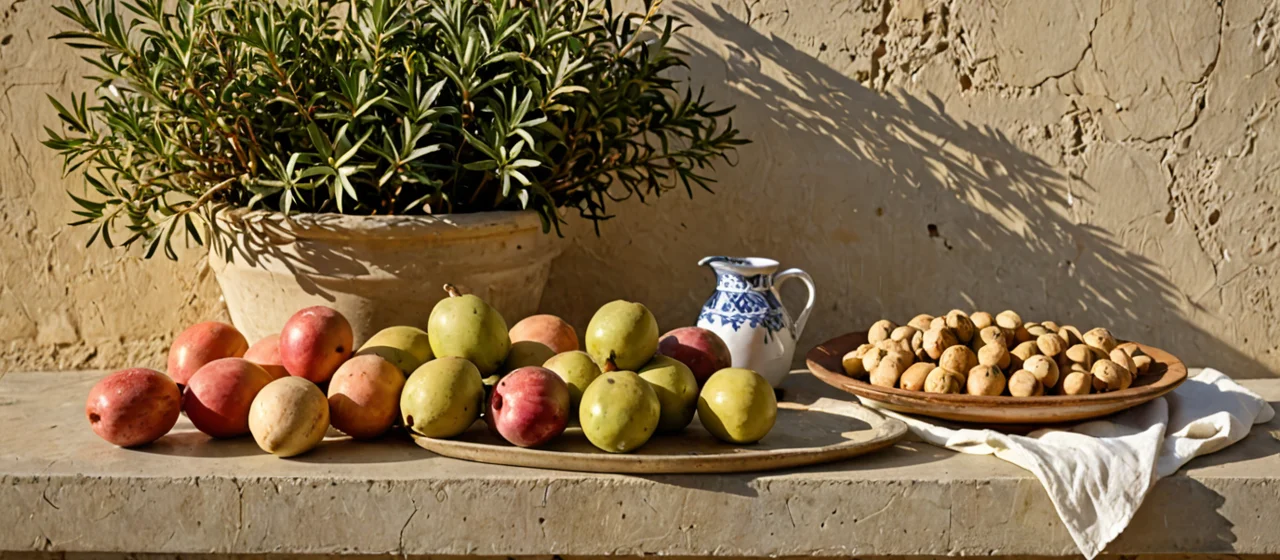
Maltese cooking is a Mediterranean cuisine built on what the island grows and catches, with strong Sicilian and southern Italian influence and a distinct set of local staples: rabbit (fenek) is the national dish and appears stewed, fried, and in pasta sauce; pastizzi — flaky pastry filled with ricotta or mushy peas — are the everyday snack and cost very little; ħobż biż-żejt is crusty bread rubbed with tomato, oil, and herbs; and the seasonal vegetables, particularly the winter crop, are taken seriously. Fish is good and expensive; the local catch is not unlimited and the best fish restaurants price accordingly.
The gap that matters is between the tourist strip and the rest. Seafront restaurants in the most-visited areas serve a generic Mediterranean menu at prices that reflect footfall, not quality. The food that Maltese people actually eat is in village restaurants, in the pastizzi shops, in the band clubs, and in family kitchens, and it is cheaper and better. If you have one rule for eating well in Malta, it is to get out of the most-visited few hundred metres and eat where the menu is in Maltese first.
Two honest caveats. First, Maltese food is not a fine-dining tradition in the way that, say, northern Italian or Basque cooking is; the pleasure is in the everyday and the seasonal, not in tasting menus. Second, the island's size means many ingredients are imported, and the "local" claim on a menu is worth checking rather than assuming — the fish may be local, the vegetables may not be.
The built environment is the culture: you can read the island's history in a walk
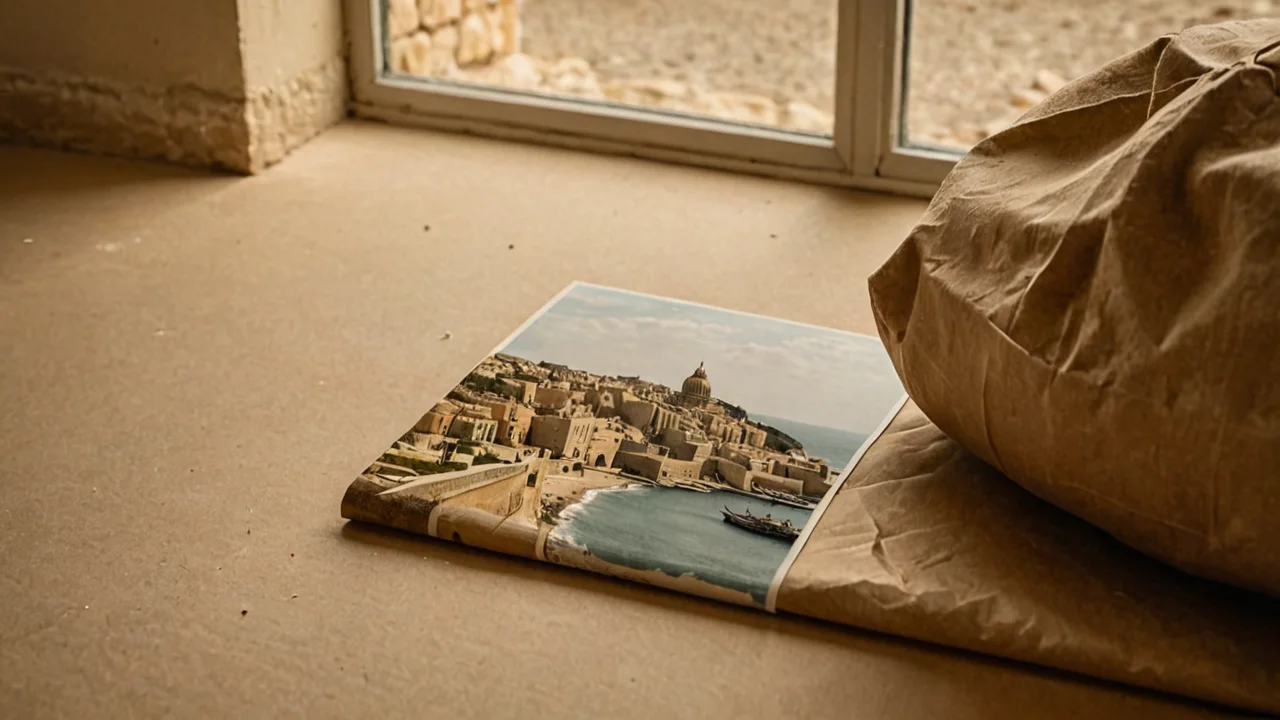
Malta's architecture compresses an unusual amount of history into a small area, and the most efficient way to understand the island's culture is to walk it rather than to visit it as a checklist. The megalithic temples are older than the pyramids and are UNESCO-listed; the Arab and Norman layers are visible in the vernacular architecture; the Knights of St John rebuilt much of the island in the sixteenth and seventeenth centuries and left the fortifications and the Baroque churches that define Valletta and the harbour towns; and the British period left its own administrative and military architecture. Valletta itself is a planned Renaissance city and a UNESCO World Heritage site, and it is small enough to walk in a day — but the harbour towns around it (Birgu, Senglea, Bormla) are where the lived history is, and they are quieter.
The limestone is the through-line. Malta's buildings are built from the local globigerina limestone, which is soft enough to carve and warm in colour, and it weathers badly in the salt air — which is why the island's architecture looks the way it does and why so much of it is under constant repair. Understanding the stone explains the texture of the place better than any single monument.
The cost of this approach: the most famous sites are crowded in summer and the heat makes walking genuinely hard from June through August. Go early, go in the shoulder months, and accept that the smaller harbour towns and the rural parts of Gozo reward more time than the headline sites. The wrong choice is treating Malta as a two-day stop between flights — the density that makes it interesting also makes it exhausting if you compress it.
Tourism is the economy, and the numbers tell you when to go and what you are paying for
Inbound tourists spent €3.3 billion in Malta in January–December 2024, up from €2.7 billion in 2023 — and the per-head and per-night figures explain the island's pricing better than any guidebook. Expenditure per capita was €924 per tourist over January–December 2024, and average expenditure per night was €115.5 in December 2024. In the first eight months of 2024, expenditure per night was €141, compared with the same period in 2023. Read those two per-night figures together and the seasonal story is obvious: the shoulder and peak months carry a much higher nightly spend than December, which is exactly what you would expect from an island whose high season is summer and whose visitor mix shifts toward higher-spending travellers in the warmer months. An inbound tourist, in Malta's National Statistics Office surveys, is a visitor staying at least one night for holiday, business, or other personal trips, and total tourist expenditure is the aggregate of what those visitors spend over a defined period, in euro.
For a visitor, this is practical. The island's carrying capacity is finite and small, and the summer concentration is the reason accommodation prices, restaurant queues, and road traffic all spike together. The shoulder months — late spring and early autumn — give you the cultural calendar partly intact, the sea still swimmable, and a much less pressured island. Winter is the cheapest and quietest, with a reduced cultural programme. The trade-off is honest: you are choosing between the island at its most alive and the island at its most comfortable, and there is no date that gives you both.
For anyone moving to Malta rather than visiting, the same figures matter in a different way. An economy that depends on this volume of inbound spending is an economy where rents, wages, and public infrastructure are all shaped by tourism, and where the gap between the visitor-facing and resident-facing island is structural, not incidental. Understanding that is the difference between being a guest and being a neighbour.
Getting past the visitor layer: what to do, in what order
The sequence that works is: learn the language situation first, then the calendar, then the geography, then the food. Language tells you who you are talking to and whether the conversation is for you. The festa calendar tells you when the island is itself and when it is working. The geography — Valletta and the harbour towns, the south, the north, and Gozo as a separate place with its own rhythm — tells you where to spend time. Food follows from all three, because the best eating is where the locals are, and the locals are where the calendar and the geography put them.
Concretely, for a first visit of any length: base yourself in or near Valletta or the harbour towns rather than in a resort strip, because you can walk to the layered history and eat well without a car. Take one day for the megalithic temples and one for Gozo, which is a different island culturally as well as geographically — slower, more rural, with its own festas and its own food. Build your dates around a festa if you can, and check the dates before you book accommodation in a festa town. Eat pastizzi from a shop, not a café. And accept that the island's most interesting culture is not in the places with the most signage.
What this approach costs: time, and a willingness to be somewhere that is not optimised for you. The visitor-facing island is efficient and English-speaking and pleasant, and there is nothing wrong with enjoying it. But the culture that makes Malta worth the trip is in the band clubs, the village festas, the Maltese-language conversations, the winter food, and the harbour towns at quiet hours — and none of those are packaged. The limits are real too: the island is small, the summer is crowded, the language is hard, and a short visit will only ever scratch the surface. The compensation is that the surface is unusually rich, and that even a few days spent in the right places will tell you more about southern Europe than a much longer trip to a place with less history per square metre.