

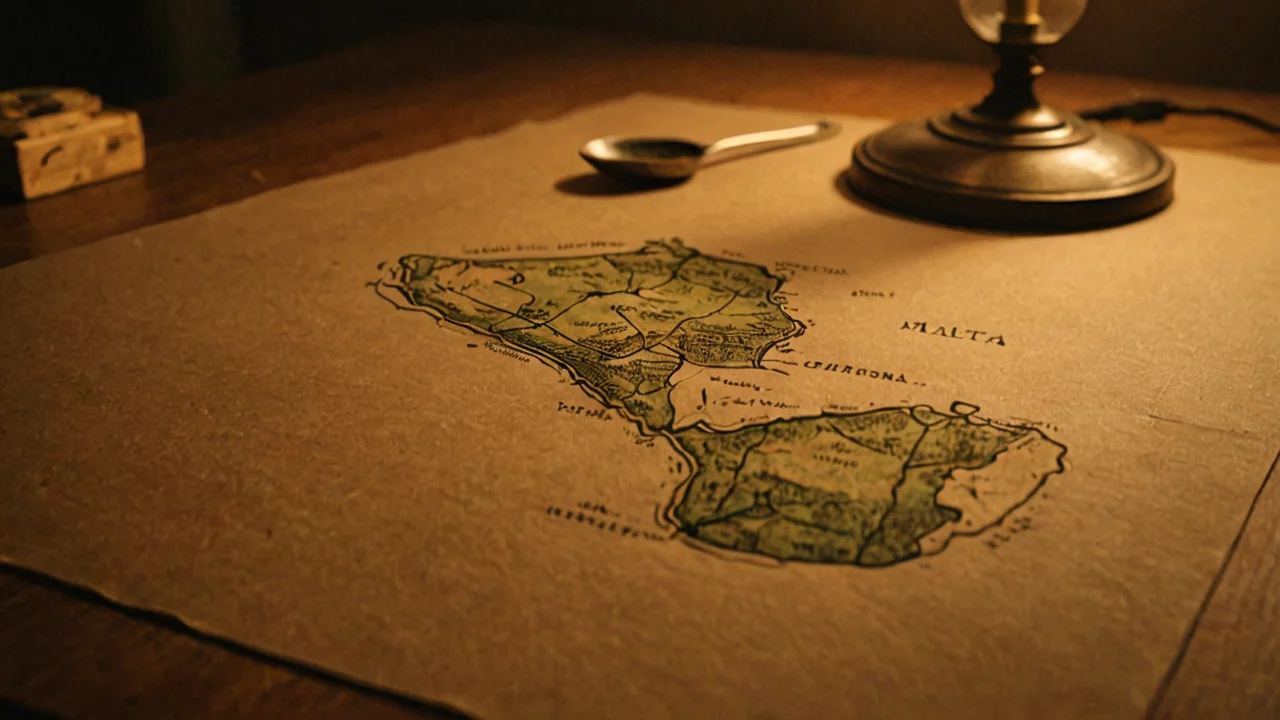
Getting to Malta means a flight into Malta International Airport (Luqa), the country's only commercial airport, and then one of four ground options: the white official taxi rank outside Arrivals, a pre-booked private transfer, a bus, or a car hire picked up at the airport or in the towns. There is no train, no ferry from mainland Europe that takes foot passengers on a short hop, and no meaningful alternative to arriving by air unless you are coming from Sicily by fast catamaran. Everything else on this page is about choosing between those four and understanding what each one actually costs you in money, time, and friction.
The airport is the whole game, and it is small
Malta International Airport sits at Luqa, roughly in the middle of the island, and it is the only place most visitors will ever touch down. That single fact shapes every transport decision you make. The airport is not on the coast and not in Valletta; it is inland, about twenty minutes' drive from the Grand Harbour and the same from Sliema, and rather less from the Three Cities and Marsaxlokk. Because the island is small — you can drive from the airport to almost anywhere a tourist stays in under forty minutes, and to the far north of Gozo's ferry terminal in well under an hour — the arrival transfer is not a major logistical problem the way it is in, say, Rome or Athens. It is a small, quick, cheap problem. Treat it that way and you will not overspend on it.
The airport has one terminal and one arrivals hall, and the ground transport is concentrated in a strip directly outside it. That concentration is good for you: you can walk out, see the taxi rank, see the bus stops, and see where the pre-booked drivers hold their name boards, all within a hundred metres. There is no need to navigate a multi-terminal maze or take an internal shuttle to a rental village. The rental car desks are inside the terminal building and the cars are in a lot a short walk away. If you have landed with a tight connection to a ferry or a hotel check-in, the airport's compactness is on your side.
The limit of this is that the airport is a single point of failure. When something goes wrong — a baggage delay, a late arrival, a strike — there is no second airport to reroute to and no alternative rail link to fall back on. Late-night arrivals are the case to think hardest about, because the bus network thins out sharply after the evening and the taxi rank, while always staffed, is where the walk-up fare is least competitive with a pre-booked transfer. If your flight lands after dark, the pre-booked private transfer is usually the better call, and it is the one decision on this page where paying a little more up front reliably buys you something.
Taxis, transfers, and what the meter is really doing
The white taxis at the airport rank are official, metered, and regulated, and they are the default for anyone who has not planned ahead. The alternative is a pre-booked private transfer, arranged online before you fly, where a driver meets you in arrivals with your name and the price is fixed at the time of booking. The practical difference is not the car — both are ordinary saloons or vans — but the certainty. A fixed pre-booked price means you know the number before you leave home, and it means the driver waits if your flight is late, which the rank taxi will not do because you are not yet in it.
For a group of three or four with luggage, the economics shift toward the transfer or the taxi, because the per-person cost of a private car divided four ways is close to what four bus tickets and a lot of walking would cost in hassle. For a solo traveller or a couple, the bus is dramatically cheaper and the taxi is a convenience you are choosing to pay for. Neither is wrong; they are different products. The mistake people make is booking a private transfer for a group of two and then feeling stung, or trying to save money on the bus with heavy bags and a hotel up a hill in Valletta, which is a city of steps and gradients where the last hundred metres can undo the saving.
The honest cost of the pre-booked transfer is flexibility. You are committed to a time and a driver, and if your plans change on the day you may be charged or lose the booking. The honest cost of the rank taxi is the opposite: you queue, you take what is there, and at peak arrival times — a Saturday morning in summer when several flights land together — the queue can be long. Neither option is expensive by northern European standards, but the transfer is the one that behaves like a fixed cost, and for budgeting that matters more than the absolute number.
The bus network is cheap, extensive, and slower than you think
Malta's public buses reach almost everywhere a visitor wants to go, and the fare structure is simple enough that you do not need to study it: you tap a contactless card or buy a ticket, and the same ticket covers a window of travel rather than a single ride, so a journey with a change is not two fares. The network radiates from Valletta, which is both its strength and its weakness. Almost every route passes through or terminates at the capital's bus terminus outside the City Gate, so getting from one town to another often means going into Valletta and out again. On a small island that is not a disaster, but it adds time to every cross-island trip.
The buses are frequent on the main corridors — the Sliema, St Julian's, and Valletta axis especially — and much thinner in the south and on the Gozo side. They are also subject to the island's traffic, which in summer and at school-run hours is genuinely heavy on the approach roads into Valletta and around Marsa. A journey that looks like twenty minutes on the map can take considerably longer in the late afternoon. If you are using the bus as your only transport, build slack into anything time-critical: a ferry departure, a booked diving session, a restaurant reservation across the island.
The bus is the right choice if you are staying in one base — Sliema, St Julian's, Valletta, or Bugibba — and doing day trips from it, and if you are travelling light. It is the wrong choice if you are moving hotels every night, carrying dive kit or golf clubs, or trying to see the south and the north of the island on the same day. The trade-off is straightforward: you save the cost of a car and the stress of Maltese driving, and you pay in time and in the discipline of checking the last bus back, which on some rural routes is early enough to end your evening plans.
Driving yourself: the freedom and the specific hazards
Hiring a car is the only way to see the island on your own schedule, and for a certain kind of trip — the south coast, the Dingli cliffs, the quieter villages, Gozo at your own pace — it is close to essential. Cars are hired at the airport and in the main towns, they are right-hand drive like the rest of Europe except for the UK connection, and you drive on the left, which catches out American and continental visitors for the first hour. The roads are generally good, the distances short, and the signage in both Maltese and English.
What goes wrong is parking and traffic. Valletta is largely closed to cars and has a network of car parks on its outskirts with lifts and escalators into the city; driving into the centre to "find a spot" is a mistake people make once. Sliema and St Julian's have narrow one-way streets and limited on-street parking, much of it resident-permit only, and getting a ticket is easy. The other specific hazard is the Maltese driving style, which is confident and close, and the roundabouts, which are frequent and where the lane discipline is looser than a visitor from northern Europe expects. None of this is dangerous so much as tiring, and after a long flight it is the last thing you want.
The cost side is not just the rental. Fuel is priced per litre at the pump, parking in the towns costs money by the hour or day, and the rental desk will want a deposit or excess waiver that can exceed the rental itself if you decline the insurance. The car is worth it when you are two or more people staying outside the main hubs, or when you plan to use the Gozo ferry with a vehicle, which turns Gozo from a day trip into a proper visit. It is not worth it if you are based in Valletta or Sliema for a few days and doing the standard sights, where the bus and your feet cover everything and the car sits in a paid space.
Gozo and the islands: the ferry is part of the journey
Gozo is reached by a car ferry from Ċirkewwa at the northern tip of Malta to Mġarr on Gozo, and the crossing is short — you are on and off in well under half an hour on the water. The ferry takes vehicles and foot passengers, runs frequently through the day and into the night, and is the only practical way to bring a hire car across. Foot passengers walk on and off; drivers queue in lanes and pay on the return leg, which is worth knowing so you are not hunting for a ticket office on the way out. The crossing itself is the easy part. The hard part is getting to Ċirkewwa, which is a long bus ride from Valletta and the reason many people take an organised day trip or drive.
There is also a fast passenger catamaran between Malta and Gozo in the summer season, which is quicker for foot passengers and lands you in a different part of the islands, and there is the Sicily connection — a fast catamaran from Valletta to Catania and Pozzallo — which is the one way to arrive in Malta without flying and the one way to leave for mainland Europe by sea. If you are combining Malta with Sicily, that catamaran is the whole reason the trip works, and it books up in summer, so it is the one sea crossing on this page you should reserve well ahead.
The limit of the ferry-and-car plan is that it commits you to a vehicle on Gozo, where the roads are narrower and the parking in Victoria and at the beaches is limited in summer. Many visitors do better leaving the car at Ċirkewwa, crossing as foot passengers, and using Gozo's own bus network or a local taxi for the day. That is slower but cheaper and avoids the queue for the car deck on the return, which on a summer evening can add real time to your day. Comino, the third island, has no cars at all and is reached by small boats from both Malta and Gozo, usually as a day trip to the Blue Lagoon; there is nothing to plan beyond which boat and which hour, and the earlier boat is the one that avoids the crowds.
How to sequence the decision, and when to break the sequence
Decide in this order and you will not waste money. First, where are you staying and for how long — one base or several? Second, does your trip include Gozo as a day trip or as a stay, and does it include Sicily? Third, how many of you are travelling and how much luggage? Those three answers determine the transport before you look at a single price. A couple based in Valletta for four days with one day trip to Gozo needs no car at all: bus, ferry on foot, bus back. A family of four staying in the south with a week and a wish to see the cliffs and the fishing villages needs a car, and should book it with the airport pickup so the first day is not spent collecting it in town.
The spending context is worth holding in your head when you weigh a transfer against a bus. Inbound tourists to Malta spent €3.3 billion in January–December 2024, an average of €924 per tourist and €115.5 per night in December 2024, with expenditure per night in the first eight months of 2024 running at €141 compared with the same period in 2023. Those are national aggregates, not a budget for your trip, but they tell you the island is not a cheap destination by southern European standards and that the transport line in your budget is a small fraction of the whole. Do not spend an hour saving a few euro on an airport bus if it costs you a stressful arrival; do spend the hour if you are staying a week and the saving compounds across every trip.
The cases where the sequence breaks are specific. If you arrive on a late flight, book the transfer regardless of the rest. If you are travelling with someone who cannot manage steps or long walks, the car or the taxi is not a luxury — Valletta and the hill towns are genuinely hard on foot, and the bus stops are not always close to the doors. If you are visiting in the height of summer, the bus and the ferry queues are at their worst and the car's air conditioning earns its keep, but so does the early start. And if your whole reason for coming is diving or sailing, your operator will usually tell you exactly where to be and when, and the transport question collapses into "how do I get to the marina by seven" — which is a taxi, booked the night before, every time.
The one thing not to do is treat the arrival transfer as the main event. Malta is small, the airport is central, and every option on this page gets you to your hotel in under an hour. The decisions that actually shape the trip are whether you have a car for the days you need one and not for the days you do not, and whether you have booked the sea crossings that fill up. Sort those two and the rest is a taxi rank and a bus stop outside a single terminal, which is about as simple as getting there gets.